Why Do Stainless Steel Water Cups Still Rust? (Part 2)
Every cup holds a story, and every day is filled with warmth. Hello everyone, welcome to "Dong Dong's Cup Talk". Lately, I’ve noticed a continuous drop in indexed pages on our company website. After investigation, I found many previously published articles had been removed, labelled as AI-generated content, which is really frustrating. I started writing articles about our industry and products back in 2020, long before AI writing tools emerged. When such tools first came out, we even ran tests on them, and surprisingly, some content they produced was copied directly from my writings.
There is no way to bypass the relevant platform rules, so I have to rewrite all the deleted articles. Still, this is not entirely a bad thing. https://www.umbottle.com/ProductsDetail-VB-10423.htmlIt gives me a chance to reflect on the shortcomings of my past writing. With years of professional knowledge accumulated, I can now present the same content in a more comprehensive way.
Today, let’s continue to discuss why stainless steel water cups can develop rust. I run accounts bearing the same name across multiple social media platforms. On Xiaohongshu, I’ve received countless messages raising this https://www.umbottle.com/ProductsDetail-VB-10423.htmlquestion: if it is made of stainless steel, why does it rust? Let me clarify this once again: stainless steel is only rust-resistant, not completely rust-proof. All materials have their performance limits. Once pushed beyond their tolerance, they will fail to function properly.
I have summarized five major causes of rust on stainless steel water cups, which I will share one by one in separate posts due to https://www.umbottle.com/ProductsDetail-VB-10423.htmlthe detailed content. Follow my account to learn the full picture, and feel free to leave a like if you find this content helpful.
Cause 2: Qualified Materials yet Subpar Workmanship — Quality Raw Materials Wasted
This is quite a pity. Some manufacturers do use standard 304 or 316 stainless steel, yet careless operations and non-standard production processes make these quality materials prone to rust. Welding defects are the most prevalent problem.
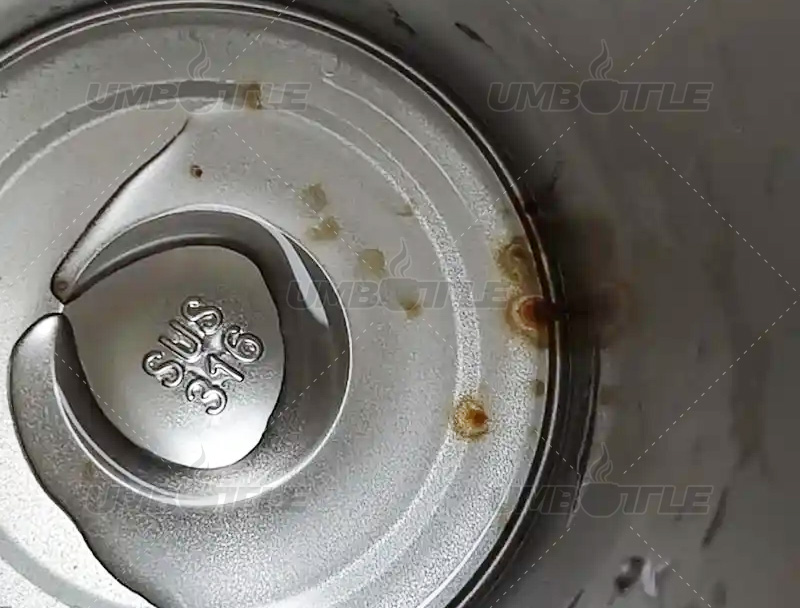
Most stainless steel water cups are assembled by welding. A few single-layer cups adopt deep drawing technology and require no welding. Welding demands strict control over temperature and duration. However, https://www.umbottle.com/ProductsDetail-VB-10423.htmlsome factories suffer from lax management and supervision, plus unskilled workers. Excessively high temperatures or prolonged welding will lead to over-welding. In short, the welded areas get burnt, causing severe local oxidation and damage to the surface protective layer. Without follow-up treatment, these areas will rust rapidly once exposed to water and air, mostly around weld seams.
A typical sign is tiny dark spots at the joint between the base and body of vacuum flasks. These are oxidation marks, and rust often originates here even on cups made of certified stainless steel.
Another common issue is iron filings and other rust-prone debris sticking to weld seams or the inner wall during production. There https://www.umbottle.com/ProductsDetail-VB-10423.htmlare two main reasons for this. First, workshop management is chaotic: stainless steel and iron products are manufactured in the same area with raw materials piled together. Iron filings easily adhere to stainless steel cups. As the filings rust over time, they will trigger oxidation on the stainless steel surface. Second, production equipment is poorly maintained. Most metalworking machinery is made of cast iron. If not cleaned and serviced regularly, iron filings and rust on the machines will transfer onto the cups, leaving hidden rust risks.
Practical Buying Tips
When choosing a water cup, focus on the weld seams. A qualified weld is flat and smooth, free of burrs, dark discoloration and uneven surfaces. Do not buy products with dark, rough welds or visible pinholes — pinholes are barely https://www.umbottle.com/ProductsDetail-VB-10423.htmldetectable to the naked eye, and their presence indicates extremely poor craftsmanship.
After receiving the cup, inspect its interior, especially the weld areas, for tiny iron filings and dark spots. Clean them thoroughly right away to prevent rust formation.
There are stories in the cup, life has warmth, use a good cup to enjoy a healthy life. We provide OEM business to more than 100 companies around the world, and produce more than 3 million pieces of various stainless steel/plastic cups and pots annually. Honoring promises, keeping reputation, ensuring quality and quantity, and delivering on time are our service principles and our professional commitment. Dongguan Zhan Yi Commodity Technology Co.,Ltd. welcomes global merchants to conduct on-site factory inspections and in-depth cooperation.