What Actually Makes Insulated Bottles Keep Stuff Hot or Cold? (Part 4)
Stories live in cups, warmth dwells in life. Hello everyone, welcome to "Dong Dong's Cup Talk". I have covered the key factors governing heat and cold retention of insulated bottles in many previous articles. Given the large volume of my published content — thousands of posts in total — those earlier pieces may be hard for readers to locate. https://www.umbottle.com/ProductsDetail-VB-10530.htmlToday, I will revisit this topic from a more comprehensive perspective to unpack what truly dictates how long insulated bottles keep liquids hot or cold.
As there is a great deal to cover, I will split this content into multiple installments. If you find this guide helpful for selecting your insulated bottle, https://www.umbottle.com/ProductsDetail-VB-10530.htmlplease give me a thumbs up. Follow me for more bottle related insights; your support means a lot.
Why do two insulated bottles that look identical and list identical specifications perform so differently? One reliably keeps water hot for 12 hours, while the other turns completely cold in half a day.
Here is another puzzling observation shared by many users: no matter how expensive an insulated bottle is, its cold retention performance is always better than its heat retention performance. https://www.umbottle.com/ProductsDetail-VB-10530.htmlMerchants rarely mention this fact, leading many consumers to assume their bottle is defective.
Nine Core Factors That Determine Heat Retention and Cold Retention Duration
Heat loss from insulated bottles occurs in three forms: thermal conduction, thermal convection and thermal radiation. https://www.umbottle.com/ProductsDetail-VB-10530.htmlAll differences in thermal performance stem from the following nine controllable variables, each supported by real world test data and practical cases.
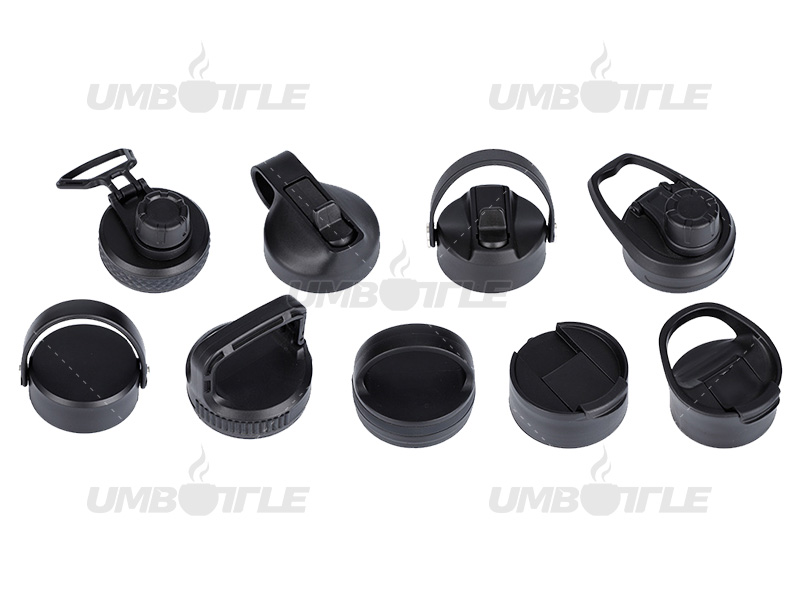
3. Seven Types of Lid Structures: Performance Ranking for Heat & Cold Retention
The sealing performance of the lid directly governs convective heat loss and creates major performance gaps among otherwise identical bottles. https://www.umbottle.com/ProductsDetail-VB-10530.htmlBelow is my field tested ranking of seven mainstream lid types on the market, sorted from best to worst thermal performance:
1. Screw on inner plug type (double layer sealing) — Top tier thermal performance. Dual internal external sealing eliminates air leak gaps. Overall heat loss is only 28 % over 6 hours. This classic design is used in legacy premium insulated bottles and delivers superior temperature locking capability.
2. Push down inner plug type — Balances performance and convenience. Push to lock design with built in sealing plug delivers excellent tightness. https://www.umbottle.com/ProductsDetail-VB-10530.htmlHeat loss reaches 32 % over 6 hours, ideal for long duration outdoor heat retention.
3. Screw on sealed lid (no inner plug, silicone gasket only) — Popular household style. Seals via compressed high precision silicone gasket, offering great cost performance. Heat loss hits 38 % over 6 hours, sufficient for all daily use scenarios.
4. Push button direct drink lid — One touch opening mechanism. Limited compression on the silicone gasket leaves minor gaps preventing full airtight sealing. Heat loss stands at 45 % over 6 hours.
5. Flip top lid — Large structural gaps from repeated opening closing reduce sealing precision and cause severe convective heat exchange. https://www.umbottle.com/ProductsDetail-VB-10530.htmlHeat loss reaches 52 % over 6 hours.
6. Slide lid — Permanent clearance within the sliding mechanism rules out full airtightness and allows continuous heat dissipation. Heat loss is 60 % over 6 hours.
7. Spout lid — Built in pressure balance vent enables constant faint air exchange. Poorest temperature locking performance; https://www.umbottle.com/ProductsDetail-VB-10530.htmlheat loss climbs to 68 % over 6 hours.
Real world test: The same 500 ml bottle body fitted alternately with a slide lid and a screw on inner plug lid, tested under identical conditions. After 12 hours, the inner plug version retained 47 ℃ water temperature, while the slide lid variant dropped to merely 29 ℃ — a dramatic performance gap.
4. Stainless Steel Wall Thickness: Governs Thermal Conduction Speed and Vacuum Stability
Industry standard specifications: Qualified insulated bottles from reputable brands feature inner liner wall thickness of 0.38 mm 0.45 mm and outer shell wall thickness of 0.4 mm 0.5 mm. https://www.umbottle.com/ProductsDetail-VB-10530.htmlLow cost cut rate generic bottles cut corners severely, with inner liner thickness merely 0.20 mm 0.28 mm.
Controlled test result: Two bottles with identical vacuum level and structure, one with standard 0.4 mm wall thickness versus one with thin wall 0.22 mm construction, show an 8 ℃ temperature difference after six hours. More critically, thin walled bottles have poor shock resistance. https://www.umbottle.com/ProductsDetail-VB-10530.htmlMinor bumps may deform the vacuum interlayer and bring inner and outer liners into contact, permanently destroying vacuum insulation.
Practical tip to avoid pitfalls: Many viral lightweight insulated bottles achieve low weight by thinning stainless steel walls, sacrificing insulation reliability. https://www.umbottle.com/ProductsDetail-VB-10530.htmlMost suffer obvious insulation failure after 1 2 months of everyday use.
There are stories in the cup, life has warmth, use a good cup to enjoy a healthy life. We provide OEM business to more than 100 companies around the world, and produce more than 3 million pieces of various stainless steel/plastic cups and pots annually. Honoring promises, keeping reputation, ensuring quality and quantity, and delivering on time are our service principles and our professional commitment. Dongguan Zhan Yi Commodity Technology Co.,Ltd. welcomes global merchants to conduct on-site factory inspections and in-depth cooperation.